Best Camera Phone Under ₹20,000 in India (2026) – Top 10 Picks
✔ No fake reviews
✔ AI-ranked picks
✔ Prices updated today
🔥 Top 3 Picks (AI Ranked)
🏆 BEST PICK

OPPO K14x 5G Smartphone, 6GB RAM,
Use this as a practical shortlist pick.
⭐ BESTPICKR TAKE
Use this as a practical shortlist pick.
- ✅ Current top-price fit in this shortlist.
- ✅ In-stock option with verified listing data.
Why this pick?
₹17,500
₹19,999
🔥 Save ₹2,499
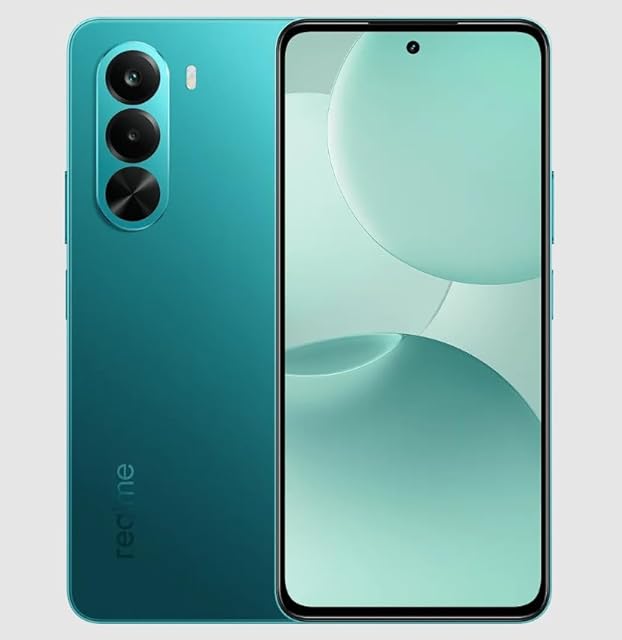
🥈 Best Budget
realme P4x 5G Smartphone, Lake Green,
Better value if upfront price matters most.
₹17,949
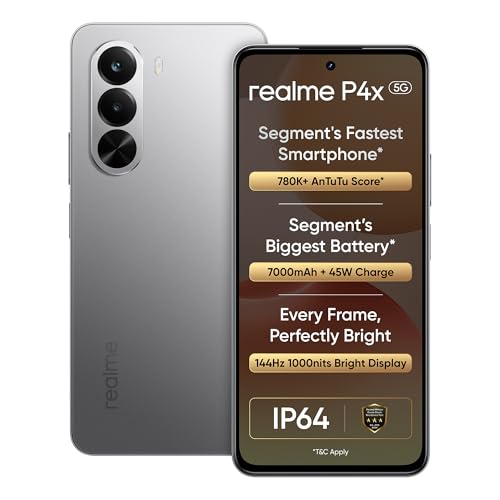
🥉 Best Performance
realme P4X Smartphone 6.72 inch 144Hz
Better if faster cooling matters more than lowest price.
₹18,999
Get price-drop alerts on WhatsApp
Selected deals, top picks and buying tips. No spam.
No spam • Selected updates only
🔥 Trending in this category
Get price-drop alerts on WhatsApp
Selected deals, top picks and buying tips. No spam.
No spam • Selected updates only

Camera quality is the single biggest purchase driver for smartphones in India. In virtually every consumer survey, it ranks as the top deciding factor. And yet camera specifications are also the most systematically misrepresented feature in mid-range phone marketing.
This guide explains what camera hardware actually determines photo quality, why the megapixel count on the back of the box is almost meaningless, and how to evaluate a phone's real camera capability before buying.
The Megapixel Myth — Still Going Strong in 2026
A 108MP camera on a ₹14,999 phone does not produce better photos than a 50MP camera on a ₹19,999 phone from a competing brand. In most cases, the opposite is true.
Here is why:
Sensor size matters more than megapixel count. A larger sensor captures more light. More light captured means better low-light photos, less noise, and better dynamic range. A 108MP sensor crammed onto a small sensor area has tiny individual pixels. A 50MP sensor with larger pixels on a larger sensor collects significantly more light per pixel.
Pixel binning reduces your effective resolution anyway. Most phones with 108MP sensors use pixel binning — combining 4 or 9 pixels into one — to output 12MP or 27MP photos. You are getting 108MP hardware that produces 12MP images. The only scenario where the full 108MP is used is bright outdoor shooting, which is where even budget cameras perform acceptably.
The real number to look for is sensor size. Common sensor sizes in mid-range phones in 2026:
- 1/2.76" — entry level, acceptable in good light
- 1/2.0" to 1/1.9" — good, noticeably better low-light
- 1/1.56" — excellent, meaningful improvement across all conditions
Larger fraction denominator = smaller sensor. 1/1.56" is larger than 1/2.76".
Aperture — How Much Light the Lens Lets In
Aperture is expressed as f/number. A lower f-number means a wider aperture, which means more light reaches the sensor.
- f/2.8 — narrow aperture, less light, weaker low-light performance
- f/1.9 — wider aperture, significantly more light
- f/1.6 — excellent, dramatically better in low light
The difference between f/2.8 and f/1.8 is approximately 2.5× more light — the equivalent of making photos 2.5× brighter in the same conditions.
In marketing materials, aperture numbers are rarely highlighted because they cannot be inflated. Megapixels can be inflated; aperture is a fixed optical measurement.
OIS — Optical Image Stabilisation
OIS physically moves the lens element to compensate for hand shake. The result: sharper photos in low light, significantly smoother videos.
Without OIS, night photos taken handheld will show motion blur. With OIS, the camera compensates for the movement and produces a sharper image.
Under ₹20,000, OIS is available on mid-to-upper range models but not universal. Its presence is a meaningful quality signal — a camera with a slightly smaller sensor but OIS will often outperform a larger-sensor camera without OIS in real-world Indian shooting conditions (indoor events, evening lighting, moving subjects).
The Secondary Camera Problem
Most phones in this range advertise a triple or quad camera system. The reality:
Primary camera (50MP or similar): This is the only camera that matters in most scenarios. It does 90% of your actual photography.
Ultra-wide camera (8MP typical): Useful for landscapes and group photos. Quality is noticeably lower than the primary — acceptable in good light, weak in anything less.
Depth sensor / macro lens: Almost universally low quality and rarely used after the first week. These are spec-padding additions that add to the camera count without adding meaningful photographic capability.
The worst outcome: buying a phone with a 50MP primary + 2MP depth sensor + 2MP macro, presented as "triple camera," over a phone with a genuine 50MP primary + 12MP ultra-wide dual setup.
Count only cameras above 5MP as meaningfully useful. Ignore depth sensors and 2MP macros entirely.
Front Camera — Critical for Indian Users
Video calls, Instagram Reels, YouTube shorts, and WhatsApp video are all front-camera activities. Indian users typically use the front camera more frequently than Western markets.
What to look for in the front camera:
- Minimum 16MP (32MP preferred for detailed selfies)
- Autofocus (most budget front cameras are fixed-focus — faces look sharp only at standard distance)
- Night selfie mode — whether it actually works or just brightens the image noisily
- 1080p video recording at 30fps minimum
The front camera is almost never adequately covered in spec sheets. Search specifically for "[phone name] selfie camera India" on YouTube before buying.
Video Capabilities Under ₹20,000
For social media content creators:
Minimum acceptable:
- 1080p at 30fps (rear camera)
- Electronic Image Stabilisation (EIS) — software stabilisation that smooths walking footage
Good:
- 1080p at 60fps (smoother motion)
- OIS + EIS combined
Rarely available at ₹20,000:
- 4K video recording (available on some models but often without stabilisation)
- Log video profiles for colour grading
For Instagram Reels and YouTube Shorts: 1080p with EIS is entirely sufficient. Do not buy a phone for 4K capability at this price range — quality control on 4K recording at ₹20,000 is inconsistent.
How Indian Photographers Actually Test Phone Cameras
The most reliable sources for camera evaluation are Indian tech channels that shoot in real Indian conditions — dusty streets, indoor wedding lighting (tungsten mixed with LED), evening food photography, and daylight outdoor shots.
Look specifically for:
- Indoor shots without artificial lighting — reveals low-light capability realistically
- Night mode comparison — not all night modes are equal; some just brighten noisily
- 6-month follow-up reviews — camera software is updated frequently; phones sometimes improve or regress in quality
Avoid relying solely on manufacturer sample photos — these are shot in ideal conditions by professional photographers and processed beyond what the phone actually delivers automatically.
🔍 Which phone under ₹20,000 gets the best camera score from Indian photography reviewers? bestpickr.in ranks every phone using AI scores that incorporate Indian reviewer camera feedback — not just megapixel counts. 👉 See phone rankings → bestpickr.in/category/mobiles
The Computational Photography Factor
Modern phone cameras do not just capture light — they process images extensively in software. Google's HDR+ processing, Samsung's Expert RAW processing, and Apple's Photonic Engine all dramatically improve what the hardware can capture.
Under ₹20,000, most phones use MediaTek or Qualcomm image signal processors (ISP) that are competent but not exceptional. The brand's camera software tuning matters here — some brands consistently produce accurate, natural colours while others over-saturate and over-sharpen.
Indian preferences: Indian buyers generally prefer warmer skin tones and slightly saturated colours in selfies. Samsung phones are known for this aesthetic. Google Pixels (not available at this price) produce more neutral, accurate colours. Knowing your aesthetic preference helps evaluate camera tuning.
FAQ
Q: Is 64MP better than 50MP for photos? Not necessarily. Sensor size and aperture matter more than pixel count. A 50MP phone with a larger sensor and wider aperture will consistently outperform a 64MP phone with a smaller sensor in real-world conditions.
Q: Which is better for camera — Samsung or Redmi under ₹20,000? Samsung's image processing tends to produce more natural, detailed photos with better white balance. Redmi phones in this range often have higher megapixel counts but process images more aggressively. Depends on whether you prefer natural or enhanced output.
Q: Does front camera autofocus matter? Yes significantly. Fixed-focus front cameras produce sharp selfies only at a specific distance (approximately 60–80cm). Move closer and faces blur. Autofocus adapts — faces are sharp regardless of distance.
Q: Can I take professional-quality photos with a ₹20,000 phone? For social media, absolutely. For professional commercial photography, no. The gap between a ₹20,000 phone and a dedicated camera or flagship phone is most visible in challenging conditions — concerts, indoor events, and night photography.
Q: How important is night mode for Indian buyers? Very important. Most Indian social occasions — weddings, festivals, family gatherings — happen indoors or in evening lighting. A phone with a genuinely effective night mode transforms usability for Indian cultural contexts.
💡 Camera specs are the most misleading specs in phone marketing. Check the AI score first. bestpickr™ surfaces what Indian photography reviewers actually said about each phone's camera — not what the spec sheet claims. 👉 Compare camera phones → bestpickr.in
Conclusion
Under ₹20,000, camera quality is determined by sensor size, aperture width, and OIS presence — in that order. Megapixel count is the least reliable predictor of real-world photo quality. A phone with a 50MP 1/1.9" sensor at f/1.8 with OIS will outperform a 108MP phone with a tiny sensor in virtually every condition that matters to Indian buyers — indoor events, evening photography, and everyday family moments. Always verify camera performance through Indian tech reviewer footage shot in real Indian conditions before committing.


 Reddit