Best Earphones For Office Calls in India (2026) – Top AI-Ranked Picks
✔ No fake reviews
✔ Carefully ranked picks
✔ Prices updated today
🔥 Top 3 Picks (AI Ranked)
🏆 BEST PICK

Aerox Enterprise Wireless 1+ Buds 2r
Balanced tablet for study, streaming and daily use.
🔥 Save ₹1,500
₹499
Save ₹1,500
🏆 BEST PICK

Aerox Enterprise Wireless 1+ Buds 2r
BestPickr Verdict
Top pickIf you want an easy daily TWS setup, this is the best pick under ₹1,000.
⚠ Skip this if: ANC is non-negotiable for your usage
Good for
Avoid if
BestPickr Take
- ✓ Music and calls feel consistently easy for daily
- ✓ Better for practical daily use
Price Insight
Based on available tracked history.
Typical price: ₹499 - ₹499
🕒 Tracking price movement
Price verified recently · Based on available tracked history
₹499
₹1,999
🔥 Save ₹1,500

🥈 Best Budget
Kratos TW02 Ear Buds 30H Playtime,
Better value if upfront price matters most.
₹498
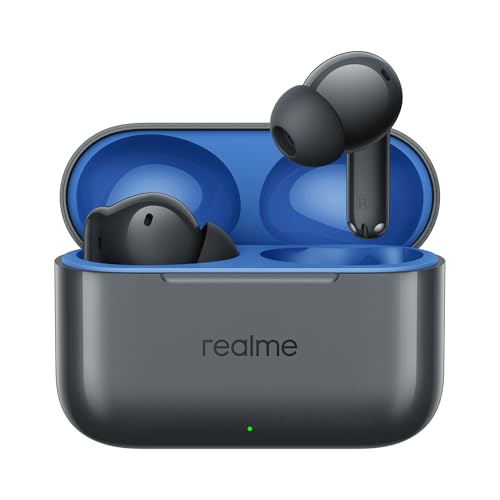
🥉 Best Performance
realme Buds T200 True Hi-Res Audio,
Better if stronger performance matters more than lowest price.
₹1,796
Get price-drop alerts on WhatsApp
Selected deals, top picks and buying tips. No spam.
No spam • Selected updates only
🔥 Trending in this category
Get price-drop alerts on WhatsApp
Selected deals, top picks and buying tips. No spam.
No spam • Selected updates only

Work-from-home and hybrid work has changed how Indian professionals use earphones. For music listening, sound quality is the priority. For office use, the priority hierarchy is completely different: microphone quality, comfort for 6–8 hour wear, call reliability, and noise management.
Most earphone buying guides do not acknowledge this distinction. This guide is written specifically for professionals who spend most of their earphone time on Zoom, Microsoft Teams, Google Meet, and phone calls — not primarily listening to music.
The Professional Use Case Is Different From Music Listening
Here is what matters most for office earphones — ranked:
- Microphone quality — the other person must hear you clearly
- Comfort for 4–8 hour continuous wear — audio fatigue and ear canal pressure matter
- Call stability — Bluetooth that drops during a client call is professionally damaging
- ANC or noise isolation — reduces background noise both for you and for the microphone
- Wear style — in-ear vs over-ear vs neckband affects fatigue and hearing safety
- Sound quality for music — important, but secondary for this use case
Most consumer earphone reviews rank these in the opposite order. This guide prioritises office use correctly.
Microphone Quality — The Most Critical Spec
Microphone quality is the most under-specified and under-reviewed aspect of earphones. Most products receive a vague "call quality is good" in reviews without any real testing.
What determines microphone quality for calls:
Microphone placement: An in-line microphone (on the cable) is further from your mouth than a boom mic. TWS earbuds with stem-design microphones (like AirPods-style earbuds) position the mic closer to the mouth.
Background noise rejection: Does the microphone pick up your voice clearly while filtering out keyboard typing, children, air conditioner drone, and traffic? This requires beamforming microphone arrays or dedicated noise suppression algorithms.
Voice pickup consistency: Does your voice sound natural and consistent, or does it fluctuate in volume as you move your head during a call?
How to verify: Search "[earphone model] call quality test India" or "[earphone model] mic test video" on YouTube. Any reviewer who tests by recording a voice memo or call sample gives you objective evidence.
Wear Style for Long Work Sessions
Different earphone styles have different fatigue profiles for extended wear.
In-ear TWS (True Wireless):
- Comfort limit: 2–4 hours for most people before ear canal fatigue
- No cable tangling
- Battery anxiety for all-day use
- Best for: Hybrid workers who have a mix of calls and desk time
Neckband Bluetooth:
- Significantly more comfortable for extended sessions
- Cable between earpieces rests on neck — less in-ear pressure than TWS
- Battery life typically 15–20 hours
- Easy to wear around neck between calls
- Best for: Full-time WFH professionals on calls 4+ hours daily
Over-ear headphones (Bluetooth):
- Most comfortable for very long sessions (no in-ear pressure)
- Better audio quality and ANC
- Less portable, heavier
- Best for: Professionals who rarely leave their desk during work hours
Wired earphones:
- Zero battery anxiety
- Consistent call quality (no Bluetooth codec variability)
- Cable inconvenience
- Best for: Fixed-desk workers who do not move during calls
ANC for Office Calls — Why It Matters Differently Here
For music listening, ANC benefits you (the listener). For office calls, ANC benefits two people: you hear less background noise, and your microphone picks up less background noise too.
Important distinction: Not all ANC earphones have equally good microphone noise suppression. The ANC that reduces noise for the listener is different from the microphone noise suppression that reduces background noise transmitted during calls. Both are important for office use — look for earphones that specifically claim good call noise suppression, not just listener ANC.
Real-world scenario: You are on a client call from a noisy café or open-plan office. Good call microphone noise suppression means the client hears your voice clearly, not your surroundings. This is a professional necessity that consumer earphone reviews often ignore.
Multipoint Connection — The Underrated Office Feature
Multipoint Bluetooth allows one pair of earphones to maintain simultaneous connection to two devices — typically your laptop and your phone.
Why this matters for office professionals:
Without multipoint: You take a Zoom call on your laptop. Your phone rings. You must manually switch Bluetooth connection, missing the first 10 seconds of the call.
With multipoint: Your earphones are connected to both devices. When your phone rings, the audio seamlessly switches. The Zoom call can be paused and resumed. No manual reconnection.
This is a small feature with significant daily quality-of-life impact for professionals who manage multiple devices. It is available on mid-range TWS earbuds and many neckbands at ₹2,500–₹5,000.
Battery Life Requirement for Full Work Days
A standard Indian office workday with hybrid calls: 8–9 hours.
TWS earbuds: Most deliver 5–8 hours per charge. For a full day, this requires mid-day case charging (5–10 minutes in case = 1 hour playback on most models). Manageable but requires planning.
Neckband: 15–20 hours is standard. A full workday without charging concern.
Over-ear headphones: 20–30 hours is standard. No battery concern for most users.
If you are on calls for significant portions of the day, neckband or over-ear gives more peace of mind. If you use earphones intermittently throughout the day for calls and music, a good TWS with a fast-charging case (10 minutes = 1 hour) is entirely viable.
Platform Compatibility — Google Meet, Zoom, Teams
All Bluetooth earphones work with all platforms on all operating systems. The platform is irrelevant to hardware compatibility.
What platform does affect:
Sidetone (hearing your own voice): Some earphones support sidetone — letting you hear your own voice softly during calls. This prevents the tendency to speak too loudly because you cannot hear yourself. Jabra earphones are known for implementing this well.
Software integration: Jabra, Poly, and Sony earphones have companion apps and some have direct integration with Zoom and Teams for call control from the earbud. Useful but not essential.
UC-certified devices: Jabra, Poly, and EPOS sell "UC-certified" headsets specifically validated for Zoom and Microsoft Teams. These have guaranteed compatibility and specific call control features. Generally above ₹5,000, but worth considering for professionals who spend 5+ hours/day on video calls.
Recommended Options by Budget and Use Case
Under ₹2,000 (wired, best mic quality for budget): Wired earphones with in-line microphone from JBL or Sony. Most reliable call quality at this price — no battery, no Bluetooth drops. Recommended for fixed-desk workers.
₹2,500–₹4,000 (TWS, daily commuter professionals): boAt Airdopes 141 Pro or similar. Good mic quality for the price, multipoint on some models, adequate battery for a workday with mid-day case top-up.
₹4,000–₹6,000 (neckband, all-day call professionals): Jabra Evolve2 Buds or OnePlus Bullets Wireless Z2 or similar. Neckband form factor, 15+ hour battery, better mic noise suppression than most TWS at this price.
₹6,000–₹10,000 (over-ear, home office dedicated): Jabra Evolve2 55 (occasionally in this range on sale), Sony WH-CH720N. Over-ear comfort, genuine ANC for both listener and microphone, long battery.
🔍 Which earphone gets the best AI score for call quality from Indian WFH buyers? bestpickr.in analyses real Indian buyer feedback on mic quality, call stability, and comfort — not just sound quality reviews written for music listeners. 👉 See earphone rankings → bestpickr.in/category/earphones
FAQ
Q: Is wired or wireless better for office calls? Wired earphones deliver the most consistent call quality — no Bluetooth interference, no battery anxiety, lower latency. If mobility is not a requirement, wired is the professional's safest choice.
Q: Does ANC help with background noise on calls? ANC reduces what you hear. Microphone noise suppression reduces what the other person hears. Both are important for professional calls. Not all ANC earphones have good microphone noise suppression — verify specifically.
Q: Which is better for calls — TWS earbuds or neckband? Neckband earphones typically have better microphone quality (larger mic element possible, better placement) and battery life for all-day use. TWS is more convenient and portable.
Q: Can I use gaming headsets for office calls? Yes. Many gaming headsets have excellent microphones (boom mic design) and comfortable over-ear fit. The sound signature is often bass-heavy for gaming, which does not affect call quality. A ₹2,000 gaming headset with a boom mic can outperform a ₹5,000 TWS for call microphone quality.
Q: How do I know if my earphone mic will sound good on Zoom? Record a 60-second voice memo on your phone using the earphone mic. Listen back at a distance of 1 metre. If it sounds clear and natural, it will sound the same on calls.
💡 Your mic quality affects every professional call you take. Check what Indian WFH buyers actually said about it. bestpickr™ surfaces mic quality feedback, call stability reports, and comfort-over-time reviews to help you find the right earphone for office use. 👉 Find your office earphone → bestpickr.in
Conclusion
For office and WFH use in India, prioritise microphone quality, wear comfort over 4+ hours, and Bluetooth stability over sound quality for music. Neckband earphones deliver the best combination of battery life and comfort for heavy call users. TWS earbuds offer convenience for hybrid workers. Wired earphones offer the most reliable call quality for fixed-desk workers. Multipoint Bluetooth is the single most underrated feature for professionals managing laptop and phone simultaneously. Verify microphone quality specifically before purchasing — it is the feature that affects your professional impression on every call, yet the feature most neglected by mainstream earphone reviews.


 Reddit