Best Mobiles Under ₹20,000 in India (2026) – Top 10 Picks
✔ No fake reviews
✔ AI-ranked picks
✔ Prices updated today
🔥 Top 3 Picks (AI Ranked)
🏆 BEST PICK

OPPO K14x 5G Smartphone, 6GB RAM,
Use this as a practical shortlist pick.
⭐ BESTPICKR TAKE
Use this as a practical shortlist pick.
- ✅ Current top-price fit in this shortlist.
- ✅ In-stock option with verified listing data.
Why this pick?
₹17,500
₹19,999
🔥 Save ₹2,499
🥈 Best Budget
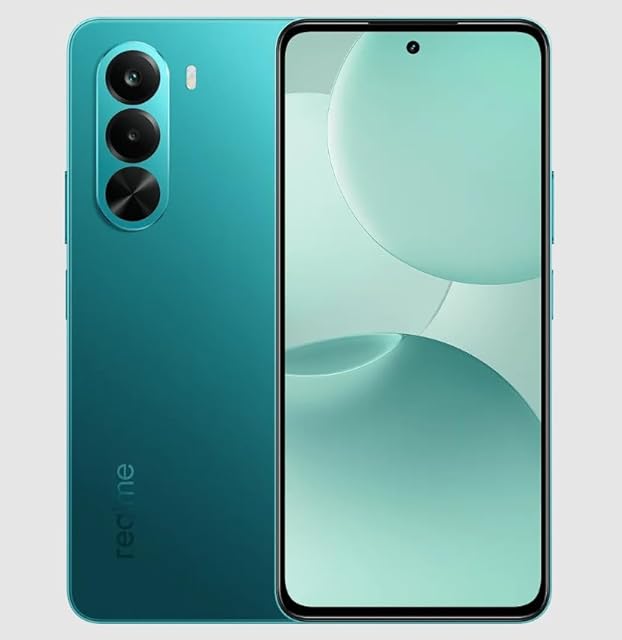
realme P4x 5G Smartphone, Lake Green,
Better value if upfront price matters most.
₹17,949
🥉 Best Performance
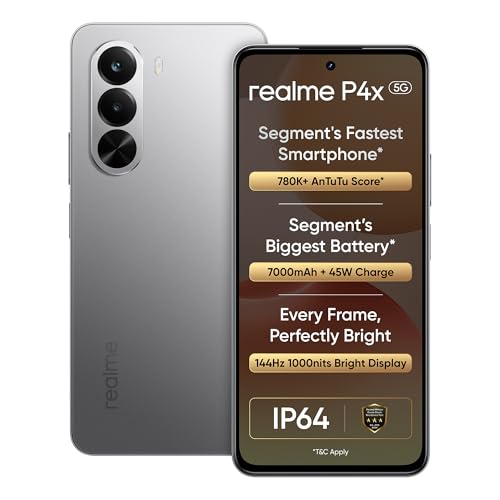
realme P4X Smartphone 6.72 inch 144Hz
Better if faster cooling matters more than lowest price.
₹18,999
Get price-drop alerts on WhatsApp
Selected deals, top picks and buying tips. No spam.
No spam • Selected updates only
🔥 Trending in this category
Get price-drop alerts on WhatsApp
Selected deals, top picks and buying tips. No spam.
No spam • Selected updates only

The ₹15,000–₹20,000 segment is where most Indian buyers face their hardest decision: you want solid performance for daily apps and gaming, a camera that doesn't embarrass you, and a battery that survives a full workday — but you cannot have all three at their best simultaneously. In 2026, the gap between a smart choice and a poor one in this price band is wider than ever, because brands have started cutting corners in less obvious ways. This guide tells you exactly what you get, what you sacrifice, and which brands are worth your money.
What to Expect Under ₹20,000 in 2026
The processor landscape under ₹20,000 has meaningfully improved in the last two years. You can now find phones running the Snapdragon 4 Gen 2, Dimensity 7025, and in some cases the Dimensity 7300 — all of which handle everyday tasks, social media, and moderate gaming without frustration. What you will not find is the Snapdragon 7s Gen 3 or Dimensity 8300 tier; those chips push the price past ₹25,000.
RAM and storage norms in 2026 sit at 6GB + 128GB as the floor and 8GB + 128GB as the mainstream. Some brands offer 256GB storage variants for ₹500–₹1,000 more — worth it if you shoot a lot of video. Virtual RAM expansion (up to 8GB extra) is available on most models but delivers limited real-world benefit for heavy multitasking.
Display quality at this price is generally a 6.7–6.8 inch 90Hz or 120Hz IPS LCD or AMOLED panel. AMOLED is now achievable under ₹20K — look for it specifically, as it dramatically improves outdoor visibility and colour accuracy versus IPS LCD. Peak brightness of 800–1000 nits is common. Fingerprint sensors are side-mounted at this price; under-display optical sensors are still largely a ₹25K+ feature.
Battery capacity is a genuine strength in this segment. 5,000mAh is standard, and some models carry 5,500mAh. Charging speeds range from 18W (avoid) to 45W (excellent for this price). You should not accept anything below 33W charging in 2026 — faster options exist at the same price.
The Biggest Compromises at This Price
Understanding what you are giving up prevents post-purchase disappointment.
No OIS (Optical Image Stabilisation). At ₹20,000, cameras use EIS (Electronic Image Stabilisation) only. For still photography in good light, this is fine. For video while walking, for low-light shots, or for portraits of moving subjects — the difference versus OIS-equipped phones is visible. If photography is your primary use case, the minimum budget for OIS is approximately ₹25,000.
Plastic builds, always. Glass backs and metal frames are reserved for phones above ₹25,000. The plastic used varies in quality — some brands use matte textured finishes that feel premium; others use glossy plastic that scratches and collects fingerprints. This is cosmetic, not functional, but worth knowing.
Slower or capped charging. While 33W–45W is available, some brands still ship 18W chargers in the box at this price. Always verify the in-box charger wattage, not just the phone's maximum supported wattage.
No IP68 water resistance. You may get IP54 splash resistance on select models (Samsung in particular), but full submersion protection requires a much higher budget. Treat your ₹20K phone as water-resistant to light rain, not waterproof.
Weaker primary camera sensors. The 50MP sensors used under ₹20K are typically smaller-format sensors (1/2.76" or smaller). They perform well in daylight but show noise in evening and indoor shots. Ultra-wide cameras at this price are usually 8MP or below and are primarily for casual use.
🔍 Want AI-ranked phones under ₹20,000 based on real Indian reviewer scores? bestpickr.in ranks every phone using signals from Indian YouTube reviewers — not just spec sheets. 👉 See mobile rankings → bestpickr.in/category/mobile
Brands Worth Considering Under ₹20,000
Redmi (Xiaomi) The Redmi Note 14 5G and Redmi Note 14 Pro 5G sit at the heart of this price band and consistently top Indian reviewer rankings for value. Redmi's strength is delivering large batteries, clean MIUI/HyperOS software, and reliable processors at the lowest price points — the Note 14 5G at approximately ₹17,999 offers a Dimensity 7025 chip with a 5,500mAh battery that genuinely lasts two days for average users. The weakness: cameras are consistently average versus Samsung and Realme at similar prices.
Realme The Realme 13 5G and Realme Narzo 70 Pro represent Realme's strongest showing in this segment. Realme tends to offer better display quality (brighter AMOLED panels) and faster charging speeds than Redmi at equivalent prices — the Narzo 70 Pro ships with a 45W charger in-box, which is uncommon at ₹18,000. Their software (Realme UI) has improved significantly in 2025–2026 with less bloatware, though it still lags behind stock Android in update frequency.
Samsung The Samsung Galaxy M35 5G and Galaxy A16 5G are Samsung's contenders here. Samsung's advantage is the most consistent software support (3–4 years of Android updates versus 2 years from Chinese brands) and the best resale value in the Indian used-phone market. The Galaxy M35 5G at around ₹19,999 offers an Exynos 1380 processor which delivers smooth day-to-day performance and a genuinely good 50MP main camera — the best camera output in this price band. The downside: Samsung charges a premium for the brand name, so raw specs per rupee are lower than Redmi or Poco.
Poco The Poco M6 Pro 5G and Poco X6 Neo are positioned as performance-first phones in the ₹14,000–₹20,000 range. Poco's Snapdragon 4 Gen 2 variants consistently outperform Dimensity competition in sustained gaming loads — BGMI and Free Fire run at high settings without throttling. If gaming is your primary use, Poco is the strongest choice under ₹20K. Software updates are slower than Samsung, and the aggressive marketing means specs occasionally overstate real-world experience.
iQOO Z series The iQOO Z9 Lite 5G and iQOO Z9x sit in this segment and offer the fastest charging speeds available under ₹20,000 — the Z9x ships with a 44W charger for under ₹18,000. iQOO's Funtouch OS is functional rather than elegant, but the hardware reliability and display quality (bright AMOLED on the Z9 series) are above average for the price. Particularly strong for users who prioritise charging speed and display brightness.
Processor Guide — Which Chip Should You Pick?
The two processor families you will encounter under ₹20,000 in 2026 are Qualcomm Snapdragon (4 Gen 2 primarily) and MediaTek Dimensity (7025, 7050, and 7300 variants).
For gaming, Snapdragon 4 Gen 2 has a measurable edge. BGMI and Free Fire specifically show better frame consistency and lower thermal throttling on Snapdragon versus Dimensity 7025 in Indian reviewer testing. The Dimensity 7300 closes this gap significantly — if you find a phone with Dimensity 7300 under ₹20K, it competes evenly with Snapdragon 4 Gen 2.
For photography and video, the processor matters less than the camera sensor and software tuning. Samsung's Exynos 1380-based phones produce better processed images in this segment because of Samsung's camera software, regardless of the chip being technically less powerful than Snapdragon.
For daily use and calls, both chipsets are entirely equivalent. WhatsApp, YouTube, Instagram, phone calls, and navigation all run identically smoothly on Snapdragon 4 Gen 2 and Dimensity 7025. Do not let processor name alone drive your decision — it matters primarily for sustained gaming loads.
Battery and Charging — The Real Numbers
In 2026, the minimum acceptable battery specification for a ₹20,000 phone is 5,000mAh with 33W charging. This combination gives you approximately 1.5 days of typical Indian usage (WhatsApp, calls, 1 hour YouTube, Maps navigation) and a full charge in under 75 minutes.
What different brands deliver:
- Redmi Note 14 5G: 5,500mAh + 45W — best raw battery life in segment
- Samsung Galaxy M35 5G: 6,000mAh + 25W — excellent capacity but slow charging
- Poco M6 Pro 5G: 5,000mAh + 45W — balanced and fast
- iQOO Z9x: 6,000mAh + 44W — best combination of capacity and speed
- Realme Narzo 70 Pro: 5,000mAh + 45W — charger included in-box
Avoid any phone in this segment still shipping with an 18W charger — several mid-tier options from smaller brands still do this in 2026 and it is not acceptable at ₹18,000+.
💡 Before buying, check whether the phone actually has the features listed — not just as a spec sheet checkbox. bestpickr™ scores every phone using Indian reviewer feedback that specifically tests real-world performance in Indian commute, heat, and usage conditions. 👉 Find the best phone under ₹20K → bestpickr.in/category/mobile
FAQ
Q: Is ₹20,000 enough for a good smartphone in India in 2026? Yes — for most Indian users, a well-chosen ₹20,000 phone covers all daily needs including 5G connectivity, smooth social media use, competent photography, and full-day battery life. The key word is "well-chosen" — several phones in this range make poor trade-offs that are not obvious from the spec sheet. Stick to brands with Indian reviewer verification rather than only trusting brand marketing or Amazon star ratings, which are frequently manipulated in this segment.
Q: Which is better — Snapdragon or Dimensity under ₹20K? For gaming-heavy users, Snapdragon 4 Gen 2 has a consistent edge in sustained load testing. For everyday users, the difference is negligible — Dimensity 7025 and 7050 handle all non-gaming tasks identically. The Dimensity 7300, available in select models, matches Snapdragon 4 Gen 2 closely even in gaming. Do not pay a significant premium for Snapdragon branding if the phone's other specifications (display, battery, camera) are weaker.
Q: Does camera quality suffer at ₹20,000? Daytime photography from a good ₹20,000 phone (Samsung Galaxy M35 5G, Realme 13 Pro) is genuinely good — sufficient for Instagram, WhatsApp sharing, and casual portraits. The real suffering happens in low light (evening shots indoors, dim restaurants) and in video stabilisation. If you shoot a lot of video or care about low-light photography, the minimum budget for a meaningful upgrade is ₹25,000–₹28,000 where OIS becomes available.
Q: Is buying from Flipkart Big Billion Days or Amazon Great Indian Festival worth it for this segment? Yes, with conditions. The ₹15K–₹20K segment typically sees ₹1,500–₹3,000 genuine discounts during these sales, plus bank card offers (10% off with HDFC, ICICI, or SBI cards) that further reduce prices by ₹1,000–₹2,000. The best strategy is to note your target phone's regular price 2 weeks before the sale, then verify the "discount" is real rather than an inflated MRP. New model launches just before festive season are common — avoid buying a phone that is about to be replaced within 30–60 days of the sale.
Q: How long will a ₹20,000 phone last? A well-maintained ₹20,000 phone from a reputable brand should serve as a primary device for 3 years with acceptable performance. Samsung phones typically receive 3–4 years of software updates, which extends security patch support. Chinese brands (Redmi, Realme, Poco) generally provide 2 years of major Android updates. Battery degradation is the most common reason for replacement — after 2 years, you can expect 80–85% of original capacity, which reduces daily endurance by 15–20 minutes of screen-on time.
Conclusion
Under ₹20,000 in 2026, the phones that actually deliver are the ones that make smart trade-offs rather than impressive-sounding spec sheets. For most Indian buyers, Redmi wins on battery life and raw value, Samsung wins on camera quality and long-term software support, and iQOO wins on charging speed and display brightness. Pick your priority, cross-check it against real Indian reviewer feedback on bestpickr.in, and you will get a phone that reliably serves you for the next 3 years without regret.


 Reddit