Best Gaming Phones Under ₹20,000 in India (2026) – Top Picks Compared
✔ No fake reviews
✔ Carefully ranked picks
✔ Prices updated today
🔥 Top 3 Picks (AI Ranked)
🏆 BEST PICK

OPPO K14x 5G Smartphone, 6GB RAM,
Balanced tablet for study, streaming and daily use.
🔥 Save ₹1,654
₹18,345
Save ₹1,654
🏆 BEST PICK

OPPO K14x 5G Smartphone, 6GB RAM,
BestPickr Verdict
Top pickBetter for practical daily tablet use.
⚠ Skip this if: you need premium-tier features above this budget
Good for
Avoid if
BestPickr Take
- ✓ Current top-price fit in this shortlist.
- ✓ In-stock option with verified listing data.
Price Insight
Based on available tracked history.
Typical price: ₹18,345 - ₹18,345
🕒 Tracking price movement
Price verified recently · Based on available tracked history
₹18,345
₹19,999
🔥 Save ₹1,654
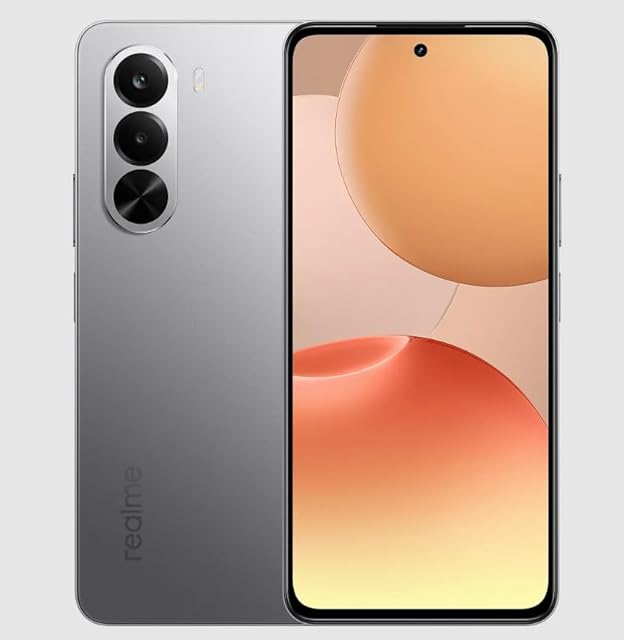
🥈 Best Budget
realme P4x 5G Smartphone, Matte
Better value if upfront price matters most.
₹18,999

🥉 Best Performance
realme P4x 5G Smartphone, 6GB RAM,
Better if stronger performance matters more than lowest price.
₹19,100
Get price-drop alerts on WhatsApp
Selected deals, top picks and buying tips. No spam.
No spam • Selected updates only
Looking for the best gaming phones under ₹20,000 in India? This guide is tuned for buyers who care about gaming-ready performance, battery endurance, and display smoothness more than flashy spec sheets. We focus on picks that still look worth buying in 2026 by checking live Amazon pricing, review depth, and BestPickr AI scoring. That means fewer dead-end clicks, fewer overhyped options, and a faster shortlist built around real value in this budget.
🔥 Trending in this category
Get price-drop alerts on WhatsApp
Selected deals, top picks and buying tips. No spam.
No spam • Selected updates only

Mobile gaming in India has crossed 500 million players. BGMI, Free Fire Max, Call of Duty Mobile, and Asphalt 9 are not casual apps — they are demanding games that punish underpowered hardware with lag, thermal throttling, and dropped frames at critical moments.
The ₹20,000 segment is where serious Indian mobile gamers shop. This guide explains exactly which hardware specifications determine gaming performance — and which are irrelevant to gaming despite being prominently marketed.
The Only Specifications That Actually Matter for Gaming
Before anything else, understand this: gaming performance on a phone is determined by three things — processor, thermal management, and RAM. Display quality affects your experience after that. Camera, fast charging speed, and audio features have essentially zero impact on gaming performance.
Processor — The Non-Negotiable
The processor (SoC — System on Chip) is the single most important component for gaming. Everything else is secondary.
Best chips for gaming under ₹20,000 in 2026:
Snapdragon 7s Gen 2 / Snapdragon 7 Gen 3: Qualcomm's gaming-optimised architecture. Excellent GPU (Adreno) performance. Handles BGMI at High settings, 60fps consistently. Low latency. Best choice in this range.
MediaTek Dimensity 7200 / 7300: MediaTek's capable mid-range. Good gaming performance, slightly behind Snapdragon 7 series in GPU benchmarks. Excellent for Free Fire and COD Mobile at high settings.
MediaTek Dimensity 8200 (if available at this price): A genuine upper-mid-range chip. Exceptional gaming performance. Occasionally found in budget flagship-esque phones in this range.
What to avoid:
- Snapdragon 680 and older 6xx series — these chips struggle with BGMI on high graphics
- MediaTek Helio G96 and older Helio series — Helio G chips are marketed as "gaming processors" but underperform significantly in demanding titles
- Any chip released before 2023 in a new phone — you are buying dated hardware at full price
Thermal Management — The Hidden Differentiator
A phone that overheats throttles its processor to prevent damage. Throttling reduces frame rates, increases input lag, and causes the stuttering that loses you gunfights.
Two phones with identical processors can perform very differently under sustained gaming loads based entirely on thermal management.
How to assess thermal performance:
- Search "[phone name] thermal throttling test India" on YouTube
- Look for Indian gaming reviewers who run 30-minute continuous gaming sessions and report temperature and performance drop
- A phone that drops from 60fps to 45fps after 20 minutes of BGMI has poor thermal management regardless of its processor specs
Features that indicate better thermal management:
- Vapour chamber cooling (mentioned in specs or confirmed by reviewers)
- Graphite thermal pad (less effective than vapour chamber but better than nothing)
- Gaming mode that pre-allocates RAM and adjusts cooling fan curve
RAM — Why 8GB Is the Minimum for Gaming in 2026
Mobile games in 2026 are memory-hungry. BGMI on high quality settings uses approximately 2.5–3GB of RAM. Combined with Android's OS overhead and background processes, 6GB RAM results in constant game reloading and background music stopping unexpectedly.
8GB RAM is the genuine minimum for a smooth gaming experience. The game stays loaded in memory, background apps do not kill the session, and loading screens are significantly faster.
12GB RAM becomes relevant if you:
- Game while having other apps running
- Use screen recording while gaming (content creation)
- Play multiple heavy games and switch between them
RAM expansion technology: Most phones now offer the ability to allocate storage as virtual RAM (4–8GB extra). This helps with background app management but does not replace physical RAM for in-game performance. An 8GB physical + 8GB virtual configuration is better than 6GB physical + 8GB virtual.
Display — What Gaming Actually Needs
Refresh Rate:
- 60Hz: Adequate for casual gaming. You can compete at BGMI, but fast movement looks less smooth.
- 90Hz: Meaningful improvement. More responsive feel, smoother character movement.
- 120Hz: The sweet spot for competitive gaming. BGMI, Free Fire, and COD Mobile all support 90fps or 120fps modes.
- 144Hz: Genuine competitive advantage for players who play at a high level.
At ₹20,000, 120Hz AMOLED displays are increasingly available. This is worth prioritising.
Touch Sampling Rate: A separate specification from refresh rate. Touch sampling rate determines how quickly the screen registers your finger input.
- 240Hz touch sampling: Standard acceptable
- 360Hz or higher: Meaningful improvement for fast-twitch gaming reactions
Some phones market high touch sampling rates only during "Gaming Mode" activation — confirm this in Indian gaming reviews before making a decision based on this spec.
AMOLED vs LCD for gaming: AMOLED has better contrast, true blacks, and slightly faster response time. More importantly, AMOLED displays look significantly better during night gaming sessions and in games with dark environments.
Battery and Charging for Gaming
Gaming drains batteries fast. A 30-minute BGMI session on high settings typically consumes 15–20% battery on most phones.
Minimum for a gaming-focused phone: 5000mAh battery.
Charging speed: 33W or faster. Gaming sessions are long — being able to charge to 50% in 30 minutes means you can top up between sessions without long waits.
Gaming while charging: Some phones throttle GPU performance when plugged in to prevent overheating. Indian gaming YouTube channels test this specifically — worth checking before buying if you play while charging.
Audio — Stereo Speakers Matter More Than You Think
Gaming audio gives spatial awareness. Knowing whether footsteps are to your left or right in BGMI can be the difference between winning and losing a close fight.
Stereo speakers (one speaker at top, one at bottom) provide directional audio. Most budget phones have only a single bottom-firing speaker — significantly inferior for gaming.
If the phone has only a single speaker, invest in a good pair of wired or TWS earphones for gaming instead.
What Does Not Matter for Gaming
Camera megapixels: Zero impact on gaming performance. Ignore completely when evaluating gaming phones.
Fast charging beyond 33W: 65W vs 33W charges your phone faster, but has no impact on gaming frame rates. Do not pay extra for this when evaluating gaming performance.
5G: Useful for general internet, but mobile gaming latency is determined by your server ping and network stability — not 5G specifically. 4G with a stable connection performs identically to 5G for gaming.
How Indian Gaming Reviewers Test Phones
The most reliable source for gaming phone performance in India is dedicated gaming channels that test under real conditions: sustained 30-minute sessions, monitored frame rates, temperature readings, and throttling behaviour.
Search specifically for "BGMI test" or "gaming test India" with the phone name. A phone's gaming performance in Indian summer heat (35°C+ ambient) can differ significantly from performance in air-conditioned conditions.
🔍 Which gaming phone under ₹20,000 gets the best AI score from Indian buyers? bestpickr.in ranks every phone using AI scores from Indian YouTube reviewer signals — including gaming-specific performance data. 👉 See mobile rankings → bestpickr.in/category/mobiles
FAQ
Q: Which processor is best for BGMI under ₹20,000? Snapdragon 7s Gen 2 or Dimensity 7200 are the strongest options in this price range in 2026. Both handle BGMI at high/ultra settings at 60fps reliably.
Q: Does a gaming phone need a dedicated gaming mode? A gaming mode that locks RAM, boosts processor, and suppresses notifications is genuinely useful. However, a phone with good thermal management and no gaming mode will outperform a phone with a gaming mode but poor cooling.
Q: Is BGMI available on all phones? BGMI has device-specific graphical tier support. Some budget phones are capped at Smooth/Balanced settings regardless of processor. Check BGMI's official device tier list for the specific model before buying.
Q: Can I play BGMI at 90fps on a ₹20,000 phone? With Snapdragon 7s Gen 2 or Dimensity 7200, yes — though sustained 90fps without throttling depends on thermal management. Short sessions: yes. 1-hour competitive sessions: varies by phone.
Q: Is iPhone better than Android for gaming at this budget? There is no iPhone available at ₹20,000. The comparison is irrelevant at this price point.
💡 Before buying any phone for gaming, check what Indian gaming reviewers actually said. bestpickr™ surfaces the real gaming performance data — frame rate drops, heating issues, throttling reports — so you don't find out after purchasing. 👉 Check gaming phone scores → bestpickr.in
Conclusion
For gaming under ₹20,000 in India, the priority order is: processor generation → thermal management → RAM (8GB minimum) → display refresh rate (120Hz preferred) → battery capacity. Everything else is secondary. A phone with a strong 2023–2024 era Snapdragon or Dimensity chip, vapour chamber cooling, 8GB RAM, and 120Hz AMOLED will serve you through 3–4 years of competitive mobile gaming better than a phone with an impressive camera spec sheet and inadequate thermal management.
Who should buy this
- Mobile gamers looking for the best value performance under a tight budget.
- Buyers who want a strong all-rounder phone with extra gaming headroom.
Who should avoid this
- Users focused mainly on camera performance over gaming power.
- Buyers expecting flagship thermals and premium build quality at this budget.
Why trust BestPickr
- We compare Amazon pricing signals with product-level AI analysis instead of leaning on star ratings alone.
- Picks are filtered for current stock, usable review depth, and practical value for Indian buyers.
- The shortlist is refreshed from live marketplace data so outdated or inflated options drop away faster.
How we ranked
- We prioritized gaming-ready performance, battery endurance, and display smoothness because that is what usually separates strong buys from forgettable ones in this budget.
- AI score, review confidence, and live price competitiveness all influence which products surface near the top.
- When two options are close, we favor the one with cleaner buyer feedback and stronger long-term value for money.
Explore related guides
Frequently Asked Questions
Which is the best phone under ₹20,000 in India?▾
The best phone under ₹20,000 depends on your balance of performance, reliability, and price. BestPickr compares AI score, review quality, and live pricing so you can shortlist the strongest options quickly.
What matters most before buying gaming phones under ₹20,000?▾
Start with the signals that affect daily ownership: gaming-ready performance, battery endurance, and display smoothness. Then check current price, stock status, and whether reviews are deep enough to trust.
Are gaming phones under ₹20,000 still worth buying in 2026?▾
Yes, if you focus on models that still look competitive at current prices. We filter for in-stock picks with enough useful review and scoring support instead of surfacing discount-heavy placeholders.
How does BestPickr rank gaming phones under ₹20,000?▾
We combine Amazon pricing signals, AI-backed product analysis, and review quality checks to highlight products that make practical buying sense for Indian shoppers today.


 Reddit