Inverter AC vs Non-Inverter AC in India (2026)
✔ No fake reviews
✔ Carefully ranked picks
✔ Prices updated today
🔥 Top 3 Picks (AI Ranked)
🏆 BEST PICK

Homilea AC Cleaning Foam
Balanced tablet for study, streaming and daily use.
🔥 Save ₹200
₹299
Save ₹200
🏆 BEST PICK

Homilea AC Cleaning Foam
Best balanced daily-use AC
BestPickr AC Verdict
Best balanced daily-use ACBetter fit if you want inverter cooling without crossing this budget.
⚠ Skip this if: you only shortlist 4/5-star ACs for lower bills
Good for
Avoid if
BestPickr Take
- ✓ Current top-price fit in this shortlist.
- ✓ In-stock option with verified listing data.
Price Insight
Based on available tracked history.
Typical price: ₹299 - ₹299
🕒 Tracking price movement
Price verified recently · Based on available tracked history
Primary fit for this shortlist
Compared against
- - LG Essential Series, 0.8 Ton 2: More suitable for this page’s primary usage fit.
- - Ecozen Smart Air Conditioner - 1.5: More suitable for this page’s primary usage fit.
₹299
₹499
🔥 Save ₹200

🥈 Best Budget
LG Essential Series, 0.8 Ton 2
Practical pick if you want lower cost with inverter cooling.
₹25,490
🥉 Best Performance
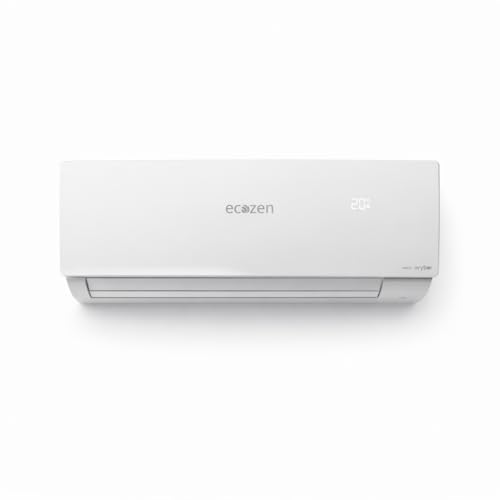
Ecozen Smart Air Conditioner - 1.5
Stronger fit for hotter rooms or longer daily usage.
₹26,500
Get price-drop alerts on WhatsApp
Selected deals, top picks and buying tips. No spam.
No spam • Selected updates only
Inverter versus non-inverter AC is still one of the biggest purchase questions for Indian buyers because it changes cooling behavior, electricity cost, noise, and how smooth daily use feels. This page is built to simplify that decision. Instead of burying the answer in technical language, we focus on which type makes sense for regular home use, which one is safer for long-term ownership, and where the cheaper option stops being the better value.
🔥 Trending in this category
Get price-drop alerts on WhatsApp
Selected deals, top picks and buying tips. No spam.
No spam • Selected updates only

Every AC salesperson in India will tell you to buy an inverter AC. Every budget-conscious buyer wonders if the higher upfront cost is worth it. The honest answer involves a calculation most people have never done — and once you do it, the decision becomes obvious.
This guide explains how both technologies work, what the real electricity savings look like in rupees, and which type makes sense for your specific situation.
How a Non-Inverter AC Works
A non-inverter AC (also called a fixed-speed AC) has a compressor with one setting: full power. It runs at 100% capacity until the room reaches the target temperature, then shuts off completely. When the temperature rises again, it restarts at full power.
This on-off cycle is what you hear when an AC makes that distinctive click-hum-click pattern. The compressor consuming maximum electricity at startup is what makes non-inverter ACs less efficient.
How an Inverter AC Works
An inverter AC has a variable-speed compressor. Instead of shutting off when the room reaches target temperature, it slows down and runs at lower power to maintain the temperature. It never fully switches off during operation.
The result: less electricity consumed overall, less wear on the compressor, and a more consistent room temperature (no warm spikes between on-off cycles).
The Electricity Bill Calculation — In Real Rupees
Assume you run a 1.5-ton AC for 8 hours per day, 150 days per year (approximately April through September in most Indian cities).
Non-Inverter AC (3-star rating, ~1.5 units/hour):
- Daily: 1.5 × 8 = 12 units
- Seasonal: 12 × 150 = 1,800 units
- At ₹8/unit: ₹14,400 per season
Inverter AC (5-star rating, ~0.9 units/hour average):
- Daily: 0.9 × 8 = 7.2 units
- Seasonal: 7.2 × 150 = 1,080 units
- At ₹8/unit: ₹8,640 per season
Annual savings: ₹5,760
The price difference between a comparable non-inverter and inverter AC is roughly ₹8,000–₹12,000. At ₹5,760 saved per year, you recover the price premium in approximately 18–24 months — and save every year after that for the life of the appliance.
🔍 Want to know which AC gives the best value for your money? bestpickr.in scores every AC using AI — factoring in real buyer feedback, star ratings, and Indian reviewer opinions. 👉 Compare ACs instantly → bestpickr.in/category/air-conditioners
5-Star vs 3-Star Rating — What ISEER Means
The Bureau of Energy Efficiency (BEE) star rating for ACs is based on the Indian Seasonal Energy Efficiency Ratio (ISEER). A higher star rating = more cooling per unit of electricity consumed.
| Star Rating | ISEER Range | Annual Electricity Cost (1.5T, 8hr/day) |
|---|---|---|
| 3 Star | 3.50–3.99 | ~₹14,000–16,000 |
| 4 Star | 4.00–4.49 | ~₹12,000–13,500 |
| 5 Star | 4.50+ | ~₹8,500–10,000 |
The 5-star inverter AC pays for its premium within two summers for most Indian households.
When a Non-Inverter AC Actually Makes Sense
Non-inverter ACs are not always the wrong choice. There are specific situations where they make practical sense:
- You run the AC for fewer than 4 hours a day — the electricity savings are small enough that the payback period stretches beyond 5 years
- You are furnishing a rental property — lower upfront cost, and the tenant pays the electricity bill
- Extreme budget constraint — a new non-inverter AC is better than an old second-hand inverter AC with unknown compressor health
Tonnage — The Calculation Indian Buyers Get Wrong
Buying an undersized AC to save money is a false economy. An undersized AC runs continuously at maximum capacity, consumes more electricity than a correctly-sized inverter AC, and cools poorly.
Simple rule for Indian homes:
| Room Size | Recommended Tonnage |
|---|---|
| Up to 120 sq ft | 1 Ton |
| 120–180 sq ft | 1.5 Ton |
| 180–240 sq ft | 2 Ton |
| 240+ sq ft | 2+ Ton (or two units) |
Adjust upward if: the room faces west, has large glass windows, is on the top floor, or regularly has more than 4 people.
Key Features to Check Beyond Inverter vs Non-Inverter
Auto-clean function: The indoor unit's evaporator coil accumulates dust and mold. Auto-clean blows hot air through the coil to dry and clear debris. Without it, you need professional servicing every 3 months.
Wi-Fi / Smart control: Useful for switching on the AC 30 minutes before reaching home. Saves electricity compared to running it all day.
PM 2.5 filter: In Indian cities with air quality concerns, a PM 2.5 filter provides meaningful indoor air quality improvement.
Copper vs aluminium condenser: Copper condensers are more durable and easier to repair. Most good brands use copper in their mid-range and above models.
Brands That Dominate Indian AC Market
- Daikin — Best-in-class reliability and after-sales service. Premium pricing.
- LG — Excellent inverter technology, wide service network.
- Voltas — Strong brand in India, aggressive pricing, good for tier-2 cities.
- Blue Star — Commercial background, very durable compressors.
- Panasonic — Underrated option, very efficient inverter technology.
⚡ Stop reading spec sheets. Read AI scores instead. bestpickr™ tells you exactly what real buyers loved — and what they regretted — about every AC on Amazon India. 👉 Check AC scores → bestpickr.in
FAQ
Q: How much electricity does a 1.5-ton inverter AC use per hour? A 5-star 1.5-ton inverter AC uses approximately 0.8–1.0 units (kWh) per hour in moderate conditions. Non-inverter equivalents consume 1.4–1.6 units per hour.
Q: Is inverter AC better for areas with frequent power cuts? Inverter ACs handle voltage fluctuations better and restart smoothly after power cuts. However, frequent power cuts do increase wear over time on any AC type.
Q: Can I install a 2-ton AC in a small room to cool it faster? No. An oversized AC cools the air quickly but does not run long enough to dehumidify it properly. You end up with a cold but clammy room. Size correctly.
Q: How often does an inverter AC need servicing? Twice a year — before summer begins and mid-season. Clean the filters yourself monthly.
Q: Do inverter ACs work during power fluctuations? They are more tolerant of fluctuations than non-inverter ACs, but a voltage stabiliser is still recommended in areas with unstable supply.
Conclusion
For the vast majority of Indian households who use an AC for 5+ hours a day through the summer, a 5-star inverter AC pays back its premium within two seasons and saves thousands of rupees every year thereafter. The non-inverter AC's lower upfront cost is almost always a false economy when you calculate total cost of ownership over 8–10 years. Buy the inverter, buy 5-star, size it correctly, and service it twice a year.
Who should buy this
- Households buying a room AC and comparing efficiency against purchase price.
- Shoppers trying to avoid overpaying for the wrong cooling technology.
Who should avoid this
- Buyers who still need to decide tonnage or room size first.
- Users only looking for direct product recommendations and not the technology comparison.
Why trust BestPickr
- BestPickr uses live product pricing and review-quality checks instead of relying on marketing claims.
- We prioritize buyer intent: which option saves more money, performs better daily, or makes the safer long-term purchase.
- Recommendations are written to help Indian shoppers decide faster, not to stretch the decision with vague generic advice.
How we ranked
- We compared the parts buyers feel daily: cooling stability, electricity use, sound profile, and overall ownership value.
- The cards are framed around real buyer scenarios instead of forcing one answer for every room or budget.
- Related links point to the next decision after technology: star rating and actual product shortlists.
Explore related guides
Frequently Asked Questions
Which is better in India: inverter AC or non-inverter AC?▾
For most buyers, inverter AC is the better choice because it is more efficient, quieter, and smoother in regular use. Non-inverter AC can still make sense for lower usage and tighter budgets.
Is inverter AC worth the higher price?▾
Usually yes if the AC will run regularly through the summer. The long-term value gets stronger when usage hours are higher.
Should I compare star rating after choosing inverter technology?▾
Yes. First choose the right cooling technology and tonnage, then compare star ratings within that shortlist.


 Reddit