RO vs UV vs UF Water Purifier: Which One Does Your Indian Home Actually Need?
✔ No fake reviews
✔ Carefully ranked picks
✔ Prices updated today
🔥 Top 3 Picks (AI Ranked)
🏆 BEST PICK
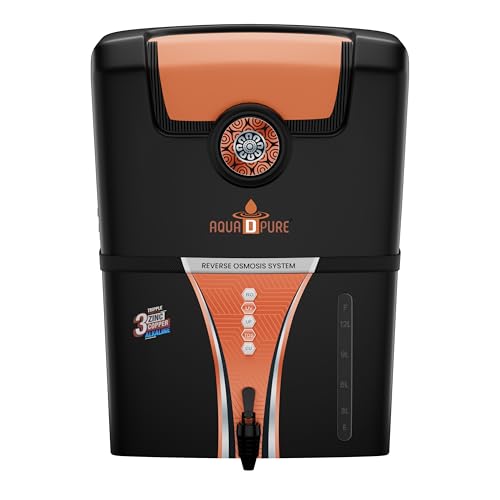
AQUA D PURE Zinc Alkaline Filter,
Balanced tablet for study, streaming and daily use.
🔥 Save ₹19,700
₹5,299
Save ₹19,700
🏆 BEST PICK

AQUA D PURE Zinc Alkaline Filter,
BestPickr Verdict
Top pickBetter for practical daily tablet use.
⚠ Skip this if: you need premium-tier features above this budget
Good for
Avoid if
BestPickr Take
- ✓ Current top-price fit in this shortlist.
- ✓ In-stock option with verified listing data.
Price Insight
Based on available tracked history.
Typical price: ₹5,299 - ₹5,299
🕒 Tracking price movement
Price verified recently · Based on available tracked history
₹5,299
₹24,999
🔥 Save ₹19,700

🥈 Best Budget
PureMyst 6 Stage Gravity Water Purifier
Better value if upfront price matters most.
₹3,099

🥉 Best Performance
DHANVI AquaFresh RO+UV+UF Water Purifier 10L
Better if stronger performance matters more than lowest price.
₹3,949
Get price-drop alerts on WhatsApp
Selected deals, top picks and buying tips. No spam.
No spam • Selected updates only
🔥 Trending in this category
Get price-drop alerts on WhatsApp
Selected deals, top picks and buying tips. No spam.
No spam • Selected updates only

India has a diverse water supply problem. In Mumbai, the water is chemically treated but biologically contaminated. In Rajasthan, underground water has dangerously high TDS (Total Dissolved Solids). In Northeastern states, the water is soft but may have bacteria.
No single purification technology solves all of these problems. The right water purifier depends on what is wrong with your specific water supply — not on what the most popular model is. This guide explains how to figure that out.
The Three Core Technologies Explained
RO (Reverse Osmosis)
RO pushes water through a semi-permeable membrane with very small pores (0.0001 microns). This removes:
- Dissolved salts and heavy metals
- Bacteria and viruses
- TDS above the safe limit
- Fluorides, arsenic, nitrates
What it cannot do alone: RO membranes remove most things, but work best combined with UV or UF for biological contamination. Pure RO may also remove beneficial minerals — look for an RO + mineraliser combination.
Best for: Hard water areas, groundwater, bore-well water, water with TDS above 300 ppm.
UV (Ultraviolet)
UV purifiers expose water to ultraviolet light, which destroys the DNA of bacteria, viruses, and other pathogens — rendering them unable to reproduce and harmless.
What it cannot do: UV does not remove dissolved solids, heavy metals, or chemical contaminants. If your TDS is high, UV alone is insufficient.
Best for: Municipal water supply that is chemically safe but may be biologically contaminated. Works best when input TDS is already below 300 ppm.
UF (Ultrafiltration)
UF uses hollow fibre membranes with larger pores than RO (0.01–0.1 microns). Removes bacteria, cysts, and some viruses without electricity.
What it cannot do: Does not remove dissolved salts or reduce TDS.
Best for: Areas with low TDS and biological contamination risk. Works without electricity — useful in areas with power cuts. Often combined with RO or UV in multi-stage purifiers.
How to Know What Your Water Needs
The single most useful thing you can do before buying a water purifier is test your water's TDS level. TDS meters cost ₹200–₹500 on Amazon and give you an immediate reading.
| TDS Level | What It Means | Purifier Needed |
|---|---|---|
| Below 150 ppm | Naturally soft water | UV or UF alone sufficient |
| 150–300 ppm | Acceptable level, some minerals | UV + UF combination ideal |
| 300–500 ppm | Slightly hard | RO recommended |
| Above 500 ppm | Hard water, safety concerns | RO mandatory |
| Above 1000 ppm | Very hard, industrial areas | RO with strong membrane |
BIS standard for drinking water: TDS should not exceed 500 ppm. In many Indian cities, tap water or bore-well water exceeds this significantly.
🔍 Which water purifier is right for your city's water supply? bestpickr.in ranks every water purifier using AI scores from real Indian buyer reviews — factoring in maintenance cost, reliability, and purification performance. 👉 Compare water purifiers → bestpickr.in/category/water-purifiers
The RO Water Wastage Problem
This is the most underdiscussed issue in water purifier marketing. Standard RO purifiers waste 3 litres of water for every 1 litre purified. In a water-scarce context, this is significant.
What to look for:
- High recovery RO: Some models claim 50–75% water recovery (wasting far less)
- RO + reject water recycling: The rejected water can be directed to plants or used for mopping — reducing actual wastage
In cities with severe water scarcity (Bengaluru, Chennai), check whether your RO's rejection rate has a practical reuse path before buying.
Multi-Stage Purification — What All the Stages Mean
Modern water purifiers are sold as "7-stage" or "9-stage" systems. Not all stages are meaningful.
Stages that matter:
- Sediment pre-filter: removes suspended particles, protects membrane
- Carbon pre-filter: removes chlorine, taste, odour
- RO membrane: core filtration
- UV chamber: kills pathogens post-RO
- UF membrane: secondary backup
- Mineraliser: adds essential minerals back (calcium, magnesium) removed by RO
Stages that are marketing fluff:
- "Silver activated carbon" — sounds premium, minimal additional benefit
- Secondary carbon post-filter labeled as an independent stage
- "Taste enhancer" stage — the mineraliser, relabeled
Count the meaningful stages, not the total.
Tank Capacity — Matching Your Usage
Most under-sink and countertop purifiers include a storage tank.
| Household Size | Recommended Tank |
|---|---|
| 1–2 people | 5–7 litres |
| 3–4 people | 8–10 litres |
| 5+ people | 12–15 litres |
A tank that is too small means the purifier cannot keep up with peak demand (morning when the whole family is getting ready). A tank that is too large sits with water for too long — reducing freshness.
Total Cost of Ownership — The Hidden Expense
The purchase price is only part of the equation. RO purifiers require annual membrane replacement and semi-annual pre-filter replacement.
Typical annual maintenance cost: ₹1,500–₹3,000 depending on brand.
Brands with transparent, affordable spare parts and local AMC (Annual Maintenance Contract) options: Kent, Livpure, AO Smith, Aquaguard (Eureka Forbes), Pureit (HUL).
Beware of brands where membranes are proprietary and expensive — you will pay significantly more over 5 years.
FAQ
Q: Is RO water safe to drink long-term? Yes, if the purifier includes a mineraliser stage. Pure RO water that removes all minerals is not recommended for long-term sole consumption. A TDS controller or mineraliser adds back essential minerals.
Q: Which is better — Kent or Livpure or AO Smith? All three are reputable. AO Smith is often preferred for build quality and membrane longevity. Kent has the widest service network. Livpure offers competitive pricing. Choose based on your budget and local service availability.
Q: How often should I change my RO membrane? Typically every 12–18 months, depending on input water TDS and daily usage. Higher TDS input water wears out membranes faster.
Q: Does a water purifier remove fluoride? RO purifiers remove approximately 90–95% of fluoride. UV and UF do not remove fluoride. For areas with high fluoride content (several districts in UP, Gujarat, and Rajasthan), RO is mandatory.
Q: What is a UV fail alarm and why does it matter? A UV lamp can burn out without visible indication. A UV fail alarm alerts you when the UV lamp stops working — meaning water is no longer being sterilised. Without this alarm, you may drink biologically contaminated water unknowingly. It is a must-have safety feature.
💧 Your family drinks this water every day. Don't pick based on a 4.2-star average. bestpickr™ breaks down what 2,000+ real buyers said — the membrane life, AMC headaches, and which brands actually last 5+ years. 👉 See water purifier scores → bestpickr.in
Conclusion
The right water purifier depends entirely on your water source and TDS level. Test your TDS first — ₹300 and 30 seconds of testing can save you from buying the wrong technology. High TDS: RO is mandatory. Municipal supply below 300 ppm TDS: UV + UF combination is sufficient and wastes no water. Whatever you buy, factor in annual maintenance costs and local service availability — the purifier that runs reliably for 7 years at low maintenance cost is better than the one with the most stages that requires proprietary parts.


 Reddit