5 Star vs 3 Star AC in India (2026)
✔ No fake reviews
✔ AI-ranked picks
✔ Prices updated today
🔥 Top 3 Picks (AI Ranked)
🏆 BEST PICK

Cruise 1 Ton 3 Star, New
Best value under budget
Offers a 3-star energy rating, which is competitive against other budget models, ensuring…
⭐ BESTPICKR TAKE
Offers a 3-star energy rating, which is competitive against other budget models...
- ✅ Current top-price fit in this shortlist.
- ✅ In-stock option with verified listing data.
Why this pick?
Ideal for: compact bedrooms, 6-8hr daily usage
Primary fit for this shortlist
Compared against
- - Ecozen Smart Air Conditioner - 1.5: More suitable for this page’s primary usage fit.
- - Godrej 1 Ton 3 Star Inverter: More suitable for this page’s primary usage fit.
₹26,989
₹43,900
🔥 Save ₹16,911
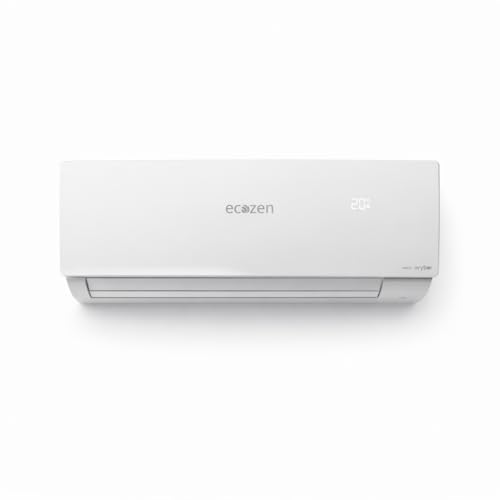
🥈 Best Budget
Ecozen Smart Air Conditioner - 1.5
Practical pick if you want lower cost with inverter cooling.
₹27,500
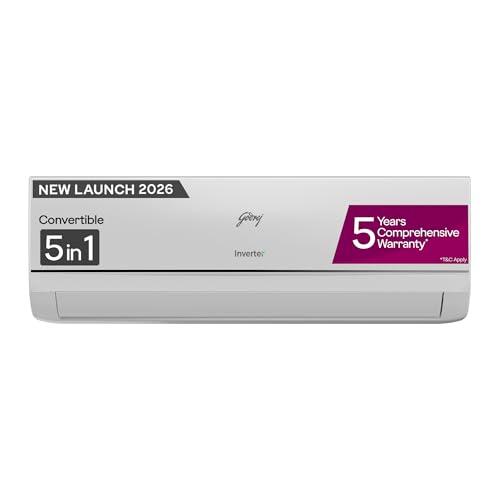
🥉 Best Performance
Godrej 1 Ton 3 Star Inverter
Stronger fit for hotter rooms or longer daily usage.
₹29,489
Get price-drop alerts on WhatsApp
Selected deals, top picks and buying tips. No spam.
No spam • Selected updates only
The jump from a 3 star AC to a 5 star AC sounds simple until you start comparing upfront price, electricity savings, room usage, and how long you plan to keep the unit. This page is built to answer that decision cleanly for Indian buyers in 2026. Instead of repeating marketing claims, we focus on where the efficiency upgrade genuinely pays back, where it does not, and which kind of buyer should stop overthinking the star label.
🔥 Trending in this category
Get price-drop alerts on WhatsApp
Selected deals, top picks and buying tips. No spam.
No spam • Selected updates only

Walk into any AC showroom in India and the salesperson will tell you to buy the 5-star inverter AC — because they earn more commission on it, and because it genuinely is a better product. But the question worth asking is: by exactly how much, and does that justify the price premium for your specific situation?
This guide runs the actual calculations, explains the Indian star rating system properly, and tells you precisely when 5-star is worth the premium and when 3-star makes more financial sense.
What the BEE Star Rating Actually Measures
The Bureau of Energy Efficiency (BEE) star rating system for air conditioners in India is based on the ISEER — Indian Seasonal Energy Efficiency Ratio. This is the ratio of total cooling output to total electricity input over a simulated Indian cooling season.
A higher ISEER means more cooling delivered per unit of electricity consumed. A 5-star AC is more efficient than a 3-star AC, period.
Current ISEER thresholds (as of 2026):
| Star Rating | ISEER Range |
|---|---|
| 1 Star | 3.10–3.29 |
| 2 Star | 3.30–3.49 |
| 3 Star | 3.50–3.99 |
| 4 Star | 4.00–4.49 |
| 5 Star | 4.50 and above |
The key thing to understand: BEE revises these thresholds periodically. A 5-star AC rated in 2020 would only qualify for a 3-star rating under 2024 standards. Always check the year printed on the BEE label — older stock carries older ratings.
The Electricity Bill Calculation — Done Properly
Let us calculate for a 1.5-ton inverter AC, the most common purchase in Indian homes. Assume:
- 8 hours daily operation
- 150 days per year (April through September in most Indian cities)
- Electricity rate: ₹8 per unit (kWh) — national average; adjust for your state
3-Star Inverter AC (ISEER ~3.75, avg consumption ~1.4 units/hour):
- Daily: 1.4 × 8 = 11.2 units
- Seasonal: 11.2 × 150 = 1,680 units
- Annual electricity cost: 1,680 × ₹8 = ₹13,440
5-Star Inverter AC (ISEER ~4.80, avg consumption ~1.0 units/hour):
- Daily: 1.0 × 8 = 8 units
- Seasonal: 8 × 150 = 1,200 units
- Annual electricity cost: 1,200 × ₹8 = ₹9,600
Annual saving with 5-star: ₹3,840
The typical price premium for 5-star over 3-star within the same brand and model line is ₹8,000–₹12,000.
Payback period: ₹10,000 ÷ ₹3,840 = 2.6 years
After 2.6 years, the 5-star AC pays for its own premium. Over a 10-year lifespan, you save approximately ₹38,400 in electricity costs compared to the 3-star equivalent.
When the Calculation Changes
The savings above assume 8 hours/day for 150 days. Your actual payback period will differ based on usage.
| Daily Usage | Seasonal Days | Annual Saving | Payback on ₹10,000 Premium |
|---|---|---|---|
| 4 hours/day | 120 days | ₹1,536 | 6.5 years |
| 6 hours/day | 150 days | ₹2,880 | 3.5 years |
| 8 hours/day | 150 days | ₹3,840 | 2.6 years |
| 10 hours/day | 180 days | ₹5,760 | 1.7 years |
The conclusion from this table:
-
If you use your AC for fewer than 4 hours daily or fewer than 100 days a year: the payback period extends beyond 6 years, and 3-star becomes more financially rational depending on how long you plan to stay in the property.
-
If you use your AC for 6+ hours daily through a full Indian summer: 5-star pays back within 3–4 years and saves significantly over the product's lifetime.
The Electricity Rate Factor
Electricity is not ₹8 per unit everywhere in India.
| State | Approx. Domestic Rate (2026) |
|---|---|
| Maharashtra (Mumbai) | ₹10–12/unit |
| Karnataka (Bengaluru) | ₹7–9/unit |
| Delhi | ₹5–8/unit (subsidised slabs) |
| Tamil Nadu | ₹4–7/unit (subsidised) |
| Rajasthan | ₹6–9/unit |
| Uttar Pradesh | ₹6–8/unit |
In Maharashtra, where electricity is expensive, the annual saving between 3-star and 5-star is closer to ₹5,000–₹6,000. The 5-star premium pays back in under 2 years.
In Delhi or Tamil Nadu with subsidised electricity, the saving is lower. The payback period extends to 3–5 years.
Action: Look up your state's domestic electricity tariff slab. Substitute your actual rate into the calculation above for an accurate payback period.
Inverter Compressor vs Non-Inverter — More Important Than the Star Rating
Here is something most AC buyers miss: the inverter technology is a bigger factor in energy savings than the star rating difference.
A 3-star inverter AC is significantly more efficient than a 3-star non-inverter AC — even though they carry the same star rating.
Why: Non-inverter ACs have a single-speed compressor that runs at 100% or off. Inverter ACs have a variable-speed compressor that runs at the right speed for the current cooling demand. The inverter technology itself reduces electricity consumption by 30–50% compared to non-inverter.
The hierarchy of importance:
- Inverter vs non-inverter (biggest impact)
- Star rating (second biggest impact)
- Correct tonnage sizing (third biggest impact)
Never buy a non-inverter AC in 2026. The efficiency and noise advantages of inverter technology far outweigh the price difference at any star rating.
What the Star Label Doesn't Tell You
The BEE star rating measures energy efficiency only. It tells you nothing about:
Cooling speed (how fast it cools a room): A 3-star AC and a 5-star AC of the same tonnage will cool a room at approximately the same speed. Efficiency and cooling speed are separate parameters.
Build quality and durability: A 5-star AC with a poor compressor brand will fail earlier than a 3-star AC with a premium compressor.
Noise level: Not captured by the star rating. A 3-star AC from a premium brand can be quieter than a 5-star AC from a budget brand.
After-sales service: Completely unrelated to star rating.
Practical Buying Decision
Buy 5-star if:
- You use the AC 6+ hours daily
- You live in Maharashtra, Gujarat, or other high-tariff states
- You plan to stay in the same home for 5+ years
- You are buying for a living room or primary bedroom (heavy-use room)
Buy 3-star if:
- You use the AC for guest rooms or occasional use (under 4 hours daily)
- You are furnishing a rental property (tenant pays electricity)
- Your current budget is stretched and the 3-star inverter from a quality brand is the maximum you can spend
- You are in a low-tariff state and the payback period exceeds your planning horizon
🔍 Which AC gets the best AI score in your budget — 3-star or 5-star? bestpickr.in ranks every AC using AI scores built from Indian YouTube reviewer signals and real buyer feedback — so you know which ones actually deliver on efficiency claims. 👉 Compare ACs → bestpickr.in/category/air-conditioners
FAQ
Q: Does a 5-star AC cool faster than a 3-star AC? No. The star rating measures energy efficiency, not cooling speed. A 5-star and 3-star AC of the same tonnage cool a room at approximately the same rate.
Q: Can I trust the ISEER number printed on the BEE label? Yes — BEE ratings are government-certified. However, real-world efficiency depends on correct installation, appropriate room sizing, and whether the AC is serviced regularly.
Q: Do 5-star ACs cost more to repair? Not significantly. The compressor, which is the expensive component to replace, uses the same technology across star ratings within the same brand. Service costs are similar.
Q: Is a 2-star non-inverter AC ever a good buy? Almost never in 2026. The electricity cost difference over 5 years between a non-inverter and an inverter AC is typically ₹20,000–₹40,000. Buy inverter, even at 3-star.
Q: What is the difference between a 5-star split AC and a 5-star window AC? Split ACs and window ACs are rated on separate scales. A 5-star window AC is not comparable in efficiency to a 5-star split AC — split inverter ACs are significantly more efficient.
💡 Know your payback period before you buy. Then check which specific AC delivers on its star rating promise. bestpickr™ tells you what real Indian buyers said about cooling performance, noise, and electricity bills — not just what the spec sheet claims. 👉 See AC rankings → bestpickr.in
Conclusion
For anyone using an AC for 6+ hours daily through an Indian summer, the 5-star inverter AC pays back its premium within 2–3 years and saves ₹30,000–₹50,000 over its lifespan. For occasional-use rooms and short-term rentals, the 3-star inverter AC is financially rational. The single most impactful decision is choosing inverter over non-inverter — that choice saves more electricity than the difference between star ratings. Once you have chosen inverter, go as high in star rating as your budget allows.
Who should buy this
- AC buyers comparing long-term electricity cost against upfront pricing.
- Families deciding between an affordable install and a more efficient long-term purchase.
- Anyone replacing an older AC and trying to avoid overpaying for the wrong star rating.
Who should avoid this
- Renters making a very short-term purchase where payback time does not matter.
- Shoppers who still need to decide AC tonnage or room size before comparing efficiency tiers.
Why trust BestPickr
- BestPickr uses live product pricing and review-quality checks instead of relying on marketing claims.
- We prioritize buyer intent: which option saves more money, performs better daily, or makes the safer long-term purchase.
- Recommendations are written to help Indian shoppers decide faster, not to stretch the decision with vague generic advice.
How we ranked
- We focus on payback logic: upfront cost, estimated usage pattern, and likely ownership duration.
- The best answer is different for light users and heavy users, so the page surfaces both instead of forcing one winner.
- Related guide links move buyers into actual AC shortlists once the efficiency decision is clear.
Explore related guides
Frequently Asked Questions
Is a 5 star AC worth the extra price in India?▾
It can be worth it if you run the AC for long hours through the summer and plan to keep it for years. For lighter use, a 3 star inverter AC often makes better value sense.
Which AC should most buyers choose in 2026?▾
Most moderate-use buyers should start with a 3 star inverter AC. Heavy-use households are the ones more likely to benefit from spending extra on 5 star efficiency.
Does star rating matter more than inverter technology?▾
For most buyers, inverter technology and the right tonnage matter first. Star rating matters more after those basics are already correct.


 Reddit